
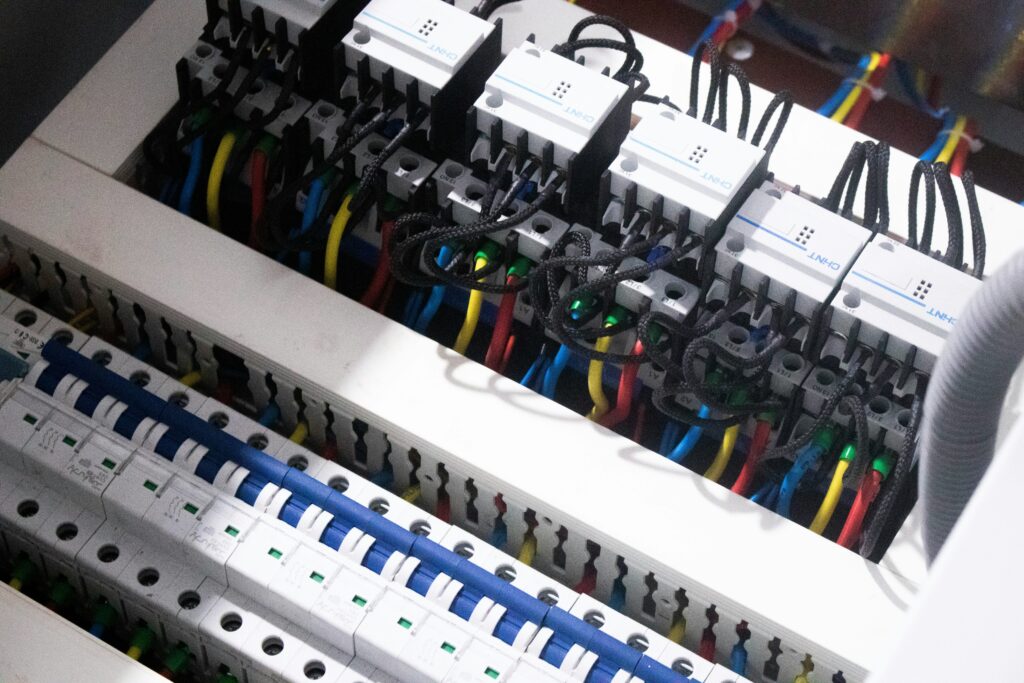
In today’s industrial world, automation plays a crucial role in improving efficiency, safety, and productivity. At the heart of almost every automated system is a device called the Programmable Logic Controller (PLC). Whether in manufacturing, oil and gas, utilities, packaging, water treatment, or transportation, PLCs ensure that complex processes run seamlessly and reliably. But what exactly is a PLC, and why is it so important? This article breaks it down in simple terms while giving you the technical insights you need.
A PLC is an industrial digital computer designed to control machinery and processes. What makes it unique is its durability and ability to operate in harsh industrial environments—dust, vibrations, extreme temperatures, and electrical noise. Unlike regular computers, PLCs are built to run continuously and provide high-speed, real-time responses to inputs from sensors and commands from operators.
One of the biggest advantages of PLCs is their flexibility. Instead of relying on physical relays or wiring, PLCs use programmable logic written in ladder diagram, structured text, or function block programming. This means engineers can easily update, expand, or troubleshoot the system without major hardware changes. It saves time, lowers maintenance costs, and reduces downtime—an essential factor for industries that operate 24/7.
PLC systems work by receiving inputs from devices such as temperature sensors, pressure switches, proximity sensors, and flow meters. These signals are processed based on the programmed logic, and the PLC sends commands to outputs like motors, valves, pumps, conveyors, and alarms. This continuous cycle—known as the scan cycle—happens in milliseconds, ensuring quick and accurate control.
Over time, PLCs have evolved significantly. Modern PLCs support features like Ethernet communication, data logging, remote access, and integration with SCADA or MES systems. They also work hand-in-hand with IIoT (Industrial Internet of Things), making them essential for smart factories and Industry 4.0 environments. With cloud connectivity, plant managers can monitor operations from anywhere and make data-driven decisions.
Another reason PLCs are popular is their reliability. They are designed to run for years with minimal failure, and when issues do occur, diagnostics are built into the system. Engineers can quickly pinpoint faults, reducing troubleshooting time. Most PLCs also support redundant configurations, ensuring the system stays online even if one controller fails.
PLCs can be found in nearly every industry. In manufacturing, they control conveyor belts, robotic systems, packaging lines, and quality control machines. In oil and gas, PLCs manage drilling operations, pipeline pressure, and refinery processes. In water and wastewater plants, they regulate pumps, chemical dosing, and filtration systems. Even transportation systems such as traffic lights, railway automation, and airport baggage systems rely on PLC-based control.
As industries aim for higher efficiency and smarter automation, PLCs remain a foundational technology. They provide the perfect balance of reliability, speed, flexibility, and integration capability. Whether you’re an engineer, technician, or someone exploring industrial automation, understanding PLCs is essential. They are the backbone of modern control systems and will continue to play a major role as automation progresses toward even more advanced technologies.
